
How Forest Bathing Can Connect Your Family with Nature
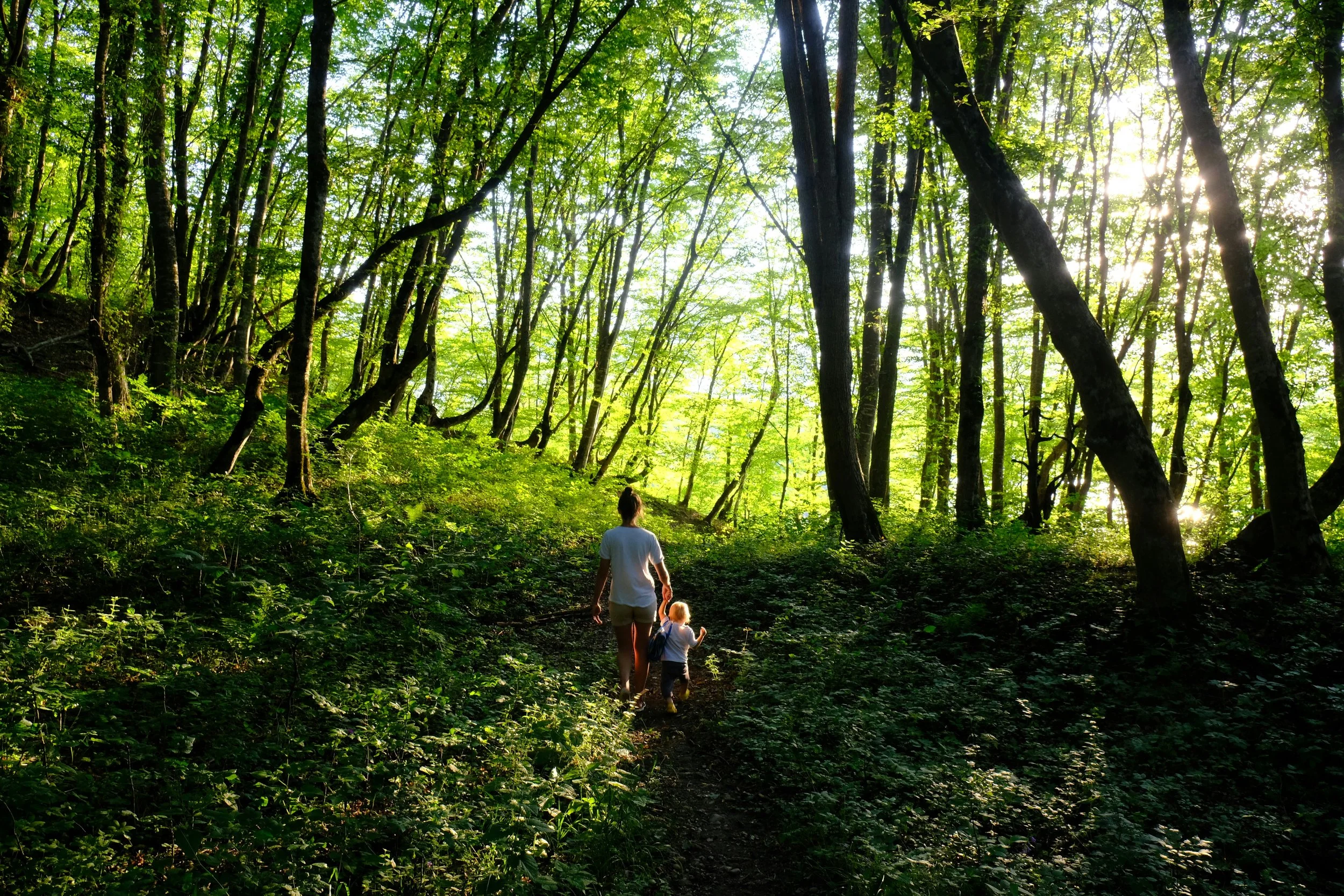
Small child and parent walking hand in hand through a woody forest trail.
My Passion for Nature-Based Therapy
Hi! My name is Sana Majeed and I am a Student Occupational Therapist from the University of Toronto. I am currently completing my Masters Degree in Occupational Therapy and have the pleasure to be on my fieldwork placement at Davis Occupational Therapy. I knew I wanted to have a learning opportunity at Larchwood Farm Nature Occupational Therapy Camp as my personal interest of spending time in nature, such as hiking, is combined with my passion for occupational therapy. As a student, I continue to learn about the various areas occupational therapists can provide support in, and I have been fascinated with the field of nature-based occupational therapy. I especially enjoyed the many nature walks at Larchwood Farm, as I saw how it positively impacted staff and campers’ physical and mental well-being. After camp concluded, I continued thinking about ways in which we can engage with nature outside of camp. Forest Bathing, also known as Shinrin-yoku, is a Japanese term that I heard often spending my childhood in Japan. However, I did not know how to implement forest bathing in my personal life. After the 2025 Larchwood Farm Nature Occupational Therapy Camp sessions concluded, I wanted to learn more about nature-based therapeutic practices, such as Forest Bathing.
What is Forest Bathing?
In the 1980s, Japan coined the term “Shinrin-yoku (森林浴)” which translates to “forest bathing” or “taking in the forest atmosphere” to tackle the challenges of urbanization and technological advancements. Increases in work hours and exposure to urban environments has led to increases in stress-related illnesses. The Japan government initiated research studies to explore the health benefits of spending time in a forest environment. The results found a reduction in stress and blood pressure while boosting the immune system and mood. Based on the findings, it became evident to Japan that forest bathing can be utilized as preventive healthcare and could have a positive impact on an individual’s health and well-being. While the Japanese Government has funded designated forest bathing trails and centres across Japan, Forest Bathing continues to be internationally recognized for its benefits.
How to Practice Forest Bathing?
In wanting to know more about how Forest Bathing has been implemented in Canada, I connected with Anne Robillard an Occupational Therapist, Forest Therapy Practitioner, and founder of Wild Results to learn more. Wild Results is located in Calgary, Alberta and is an Outdoor Healthcare Practice which fuses nature-based occupational therapy, forest bathing, and forest therapy.

The interchangeable definition of shinrin-yoku is “taking in the forest atmosphere”, which applies to our human senses. We can take in the forest atmosphere by connecting what we see, hear, taste, smell, and touch in a forest environment. While Forest Bathing can be practiced without a guide, Forest Bathing sessions with a certified guide can offer a different experience. Guided experiences involve a “Standard Sequence'“ designed to integrate various nature-connection activities. Together, Anne and I created a list of different activities you and your child can use to engage your senses in a fun way!
You and your child can practice taking in the forest atmosphere by using the senses as a natural guide:
Vision: During your walk, play a scavenger hunt game with your child by identifying natural objects in the outdoor environment that are different colours. Keep track of colours by using the colours of the rainbow, practice turn-taking by sharing objects you see that are different colours, and looking for natural objects that have multiple colours such as a mushroom!
Hearing: At the beginning of your walk, ask your child to make a fist with their hand. Have them lift a finger once they hear a sound in the outdoor environment such as a bird chirping. For every new sound your child hears, they lift a finger up. At the end of your walk, you can check-in with your child to count how many different sounds they heard!
Taste: Use plants that are safe to eat and that have distinctive properties such as fresh mint leaves for smelling and tasting. For tasting, this can happen when you have finished your walk by tasting tea that has steeped in a thermos.
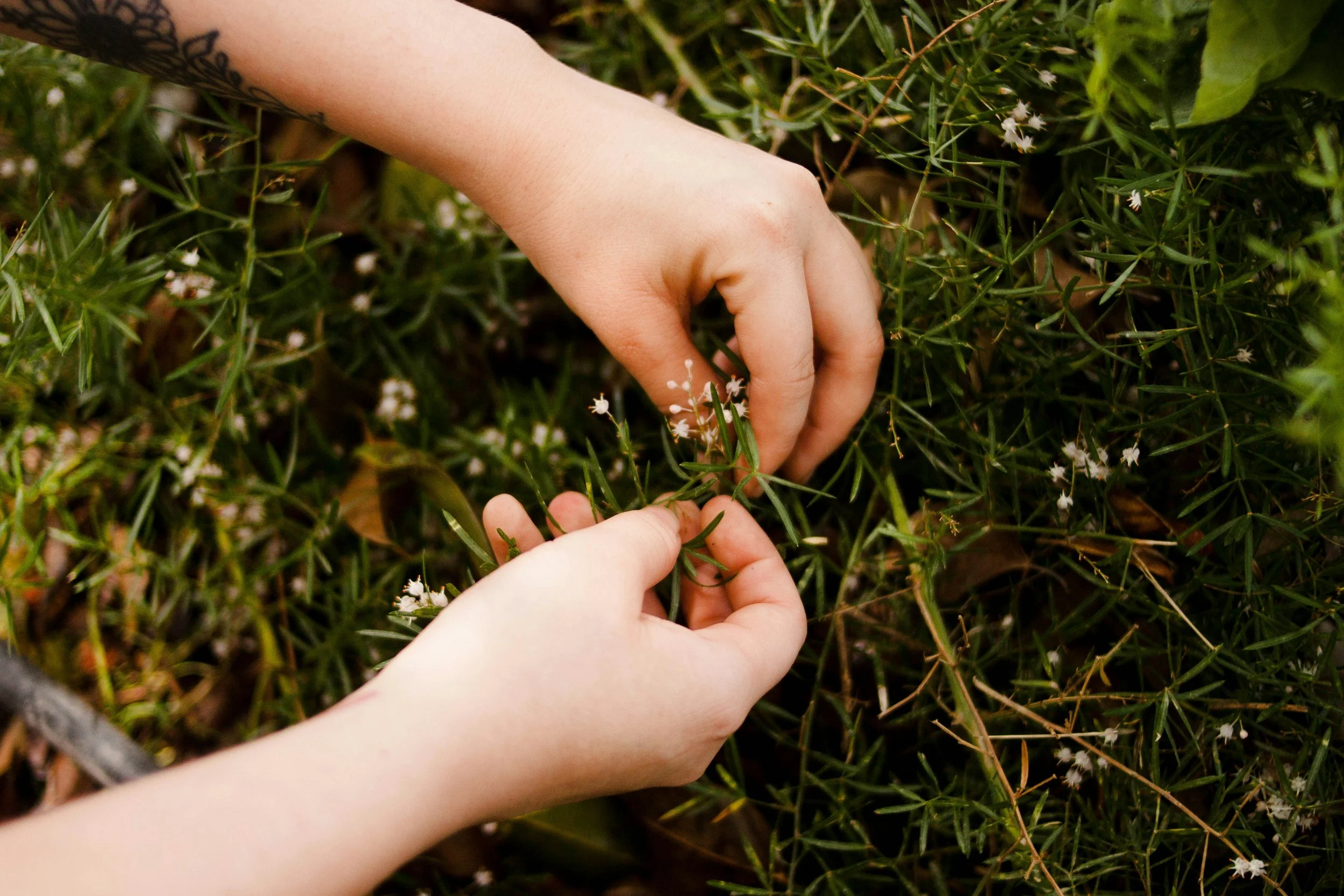
Touch: For trees that have an interesting patterns, feel the unique bark patterns with your fingers and the inside of your palm. Encourage your child to feel the natural elements with different parts of their body such as brushing pieces of grass on their arms. If your child enjoys climbing and grounding (walking barefoot on the ground) themselves, they can walk on soft patches of grass with their feet!
Smell: Look for flowers to smell along the trail. You can also ask your child to place the tip of their finger in soil if they are curious! Another fun idea is to create a smelling bowl. Ask your child to look for something they are curious to smell such as a leaf or flower and tear the pieces in your palm. Rub and squish the pieces in your palm to release their scents. Cup your hands together to then smell the natural element. Check out the Instagram page for Wild Results to visually learn how Anne creates a smelling bowl!
You can also practice using your other senses such as interoception, proprioception, and vestibular.
Interoception: Together take a deep breath and notice how the belly rises. Doing body scan meditiation involves moving awareness from body part to body part. Start at your toes and make your way to the top of your head! Provide gentle reminders if your child’s attention shifts away.
Proprioception: During your walk, if you and your child found big rocks or parts of trees, pull or push bigger items along the way!
Vestibular: Look for different trails such as steep or narrow paths to walk up and down. You and your child can also climb or balance on various sizes of logs or tree stumps!
