
Larchwod Blog
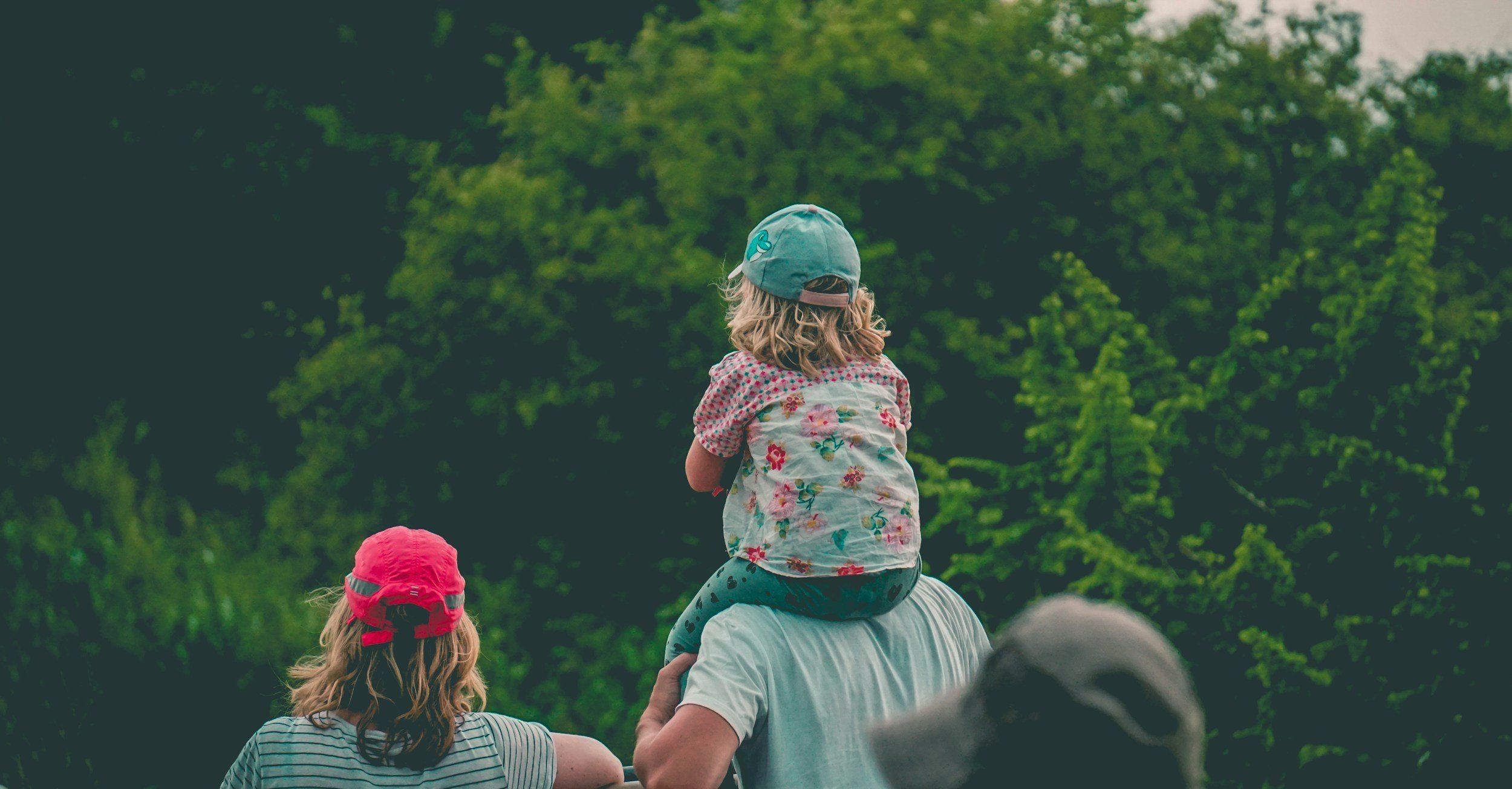
Need to balance screen time with green time
Benefits of nature play:
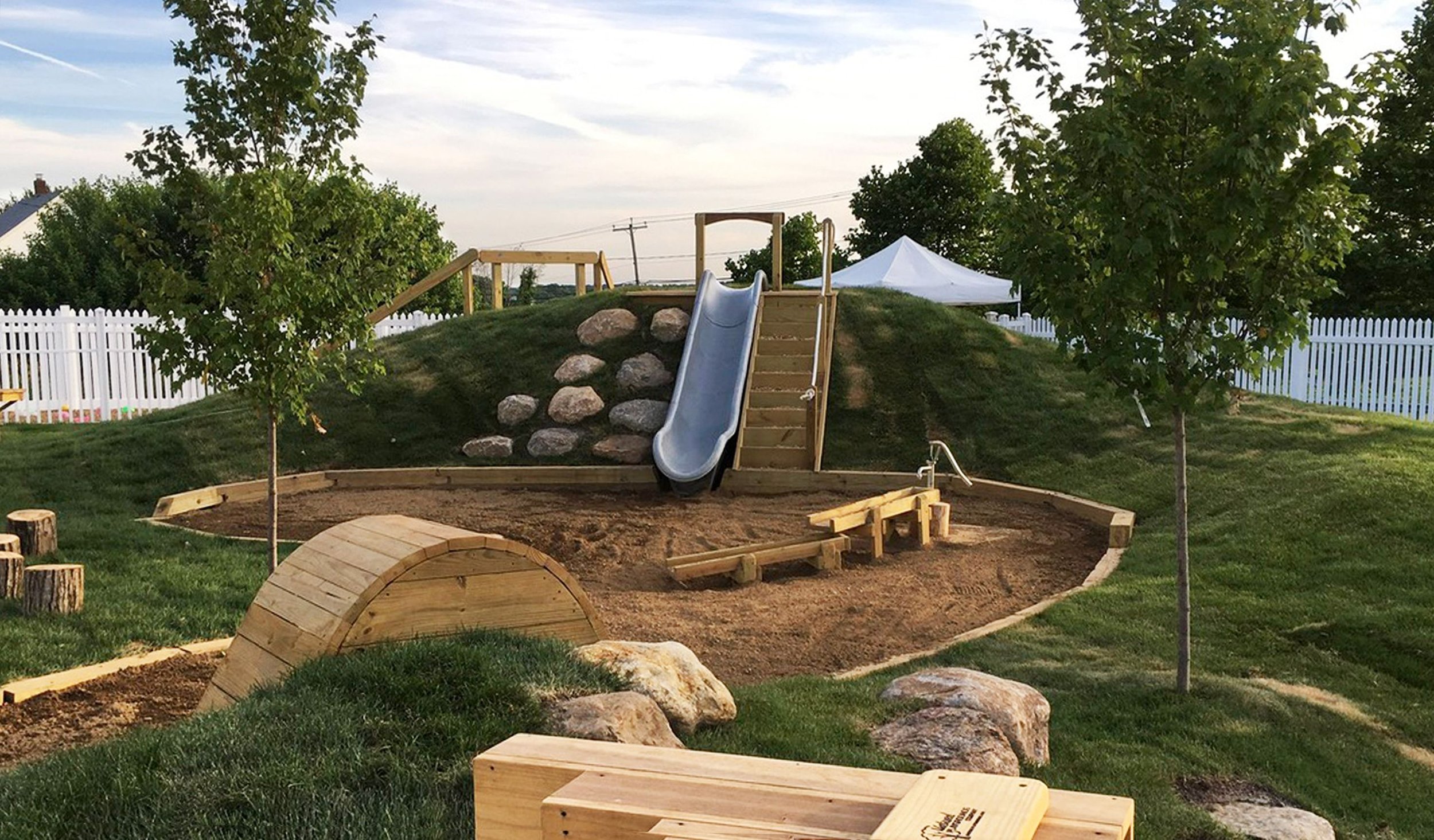
Natural Playgrounds
For children, play is learning. There is no better space for children to learn than the outdoors, and there is no better play resource than nature! In the structured, busy and the technologically advanced world we live in, the role of outdoor play that we experienced as children has been forgotten.
While we need to support the importance of technology as part of modern-day life and education, we need to be mindful and purposeful for that use of technology and balance it with nature play every day.
There is a huge amount of research on the benefits of nature play for children. Firstly, there are alot of physical benefits such as moving in ways to promote physical wellness. For example, children when engage in nature play, they move in different ways then other children. They are lifting rocks, climbing over things, and running through imaginary nature spaces. Studies have found that when children play outdoors, they are more physically active than when they play indoors. When children run, jump, climb, throw and kick balls, and ride toys that require balance, they also build gross motor skills and start developing a habit of being active.
Natural environments provide children with more challenging situations and ability to cope with stress. There has been multiple evidence suggesting that repeated exposure to high-quality, unstructured outdoor play opportunities has a positive impact on social and cognitive development such as executive functioning (this includes memory, flexible thinking and self-control). Contact with alot of living organisms (plants, animals, insects, bacteria) can also help boost children’s immune system.
Natural environments also provide alot of sensory input for children for example proprioceptive input (which is our bodies system that receives input from muscles and joints to know our bodies position in space) for ex being able to touch your nose with your eyes closed. Children need different sensory experiences throughout their childhood to optimize their sensory integration.
How to get more outdoor play in your child’s life:
Get them to help with outdoor chores like watering the grass and weeding
Add a regular outdoor activity into the schedule for example going for a daily walk or bike ride
Organize play dates at the park instead of in the home
Make up a scavenger hunt for your next park visit and get your children to run around to find items on the list. A scavenger hunt with visuals would be helpful for younger children.
Take old kitchen pots and tools to the beach to make mud pies or even in your own garden
Take morning breakfast or lunch outside and have a picnic
Play hide and seek in the park, this will help get them outdoors but also increase their confidence in exploring new environments with independence
Do a summer camping trip
Using the Core Routines of Nature Connection
When I was in the final year of my undergraduate degree I had the most amazing opportunity to take a course on the applications of wilderness therapy. The course itself took place primarily over an eleven day backcountry canoe trip in Strathcona Provincial Park. Throughout the course we learned about ways to facilitate wilderness therapy groups and sessions. As well as leadership, group debrief facilitation techniques, backcountry cooking, survival, and canoeing.
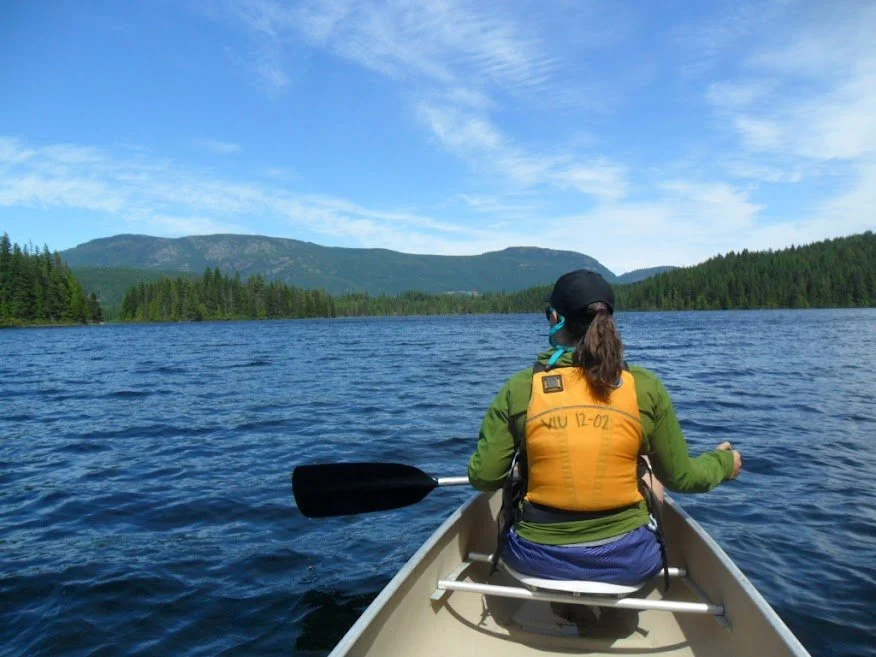
A key pillar of our wilderness therapy training was the utilization of the core routines of nature connection as outlined in the book Coyote's Guide to Connecting with Nature by Young, Haas, and McGown. The core routines of nature connection facilitate a strong connection to nature and the environments one finds themselves in. Practicing these routines creates learning habits that when repeated and internalized heighten our connection to the natural world. Which in turn opens us to learning from the natural world, and reconnect with ourselves. Connection to nature is shown to improve and foster resilience, confidence, sensory processing, attention, mindfulness, mental health, and wellbeing.
Throughout the course the core routines we practiced every day were maps of the day, expanding sensory awareness, learning the language of birds, exploring field guides, story of the day, and sit spots. While I enjoyed and found benefits from all of these routines, the one that I found the most impactful was sit spots.
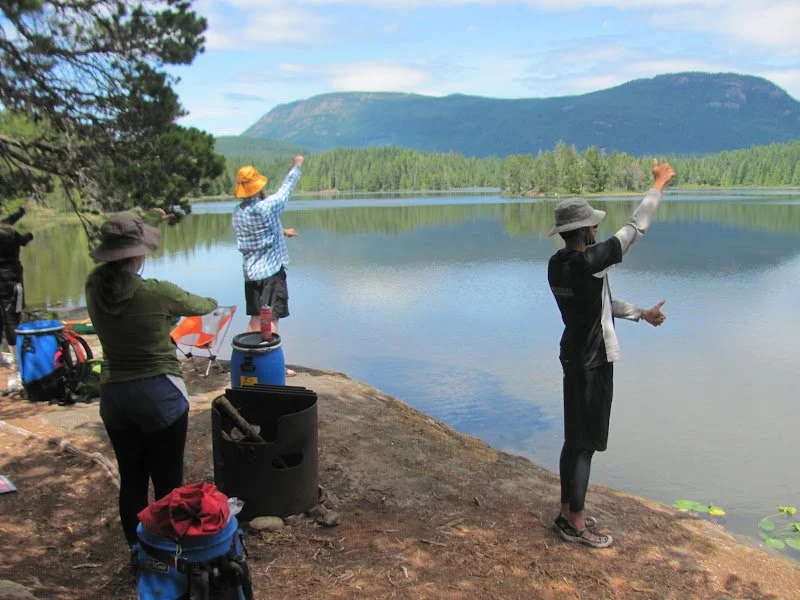
Practicing sensory expansion
To find our sit spot we began with wandering, this is another core routine to connect with nature. We wandered with no aim or purpose until we found a spot that felt good to us, trying out as many spots as we needed until we found the right one. Once a spot had been selected the next step was to go through a sensory expanding routine and mindfulness practice. After this we spent time in our spot to just sit, taking in everything around us and within ourselves. This was a unique experience to every person, as everyone had a different spot, and a different personal/ emotional experience during their time in their spot. For myself, the first time I went to my sit spot for thirty minutes straight was the first time in months I was able to process some of the stress and grief I had been experiencing for months leading up to this course at work. It was the first time I was completely disconnected from my work and my clients in years. The realization that I was deeply worried about the wellbeing of some of my clients and had no way of knowing how they were faring until I got back home in two weeks; along with the fact that I did not feel like I had the support to help these individuals when working all came crashing down on me.
I’ve never really experienced that level of emotional clarity at once, it felt like a tidal wave of grief, fear, anxiety, and stress crashing over me with unbelievable force. If I had never been able to identify these feelings I had been burying down each day so I could show up for the youth I worked with, I would have never been able to work through it. Beyond working through it, once I could identify what was happening, when I returned home I could go to my manager and identify exactly what I needed and what my clients needed from us.
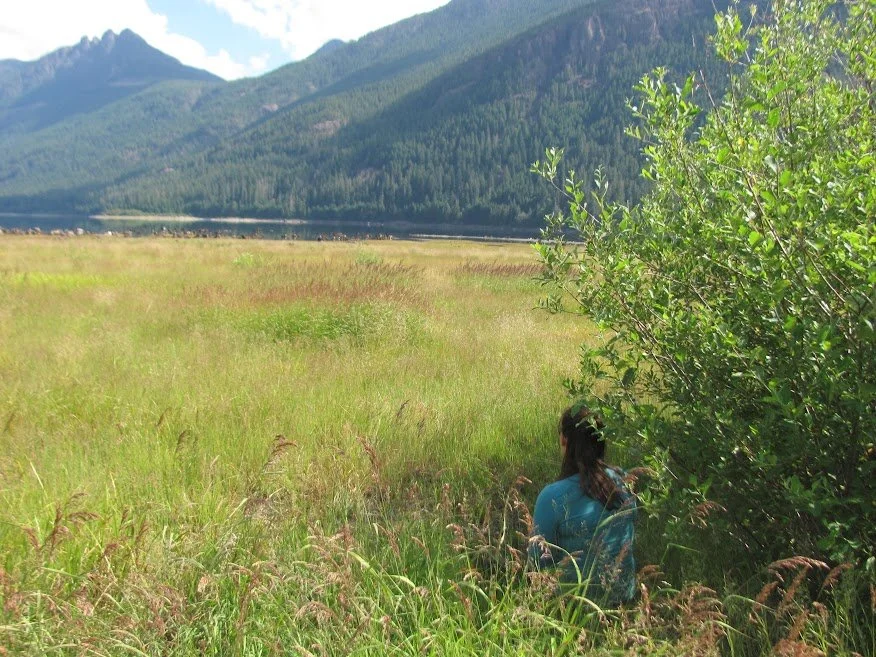
My sit spot
This experience had a significant impact on me personally, and as a person working in a helping profession. Our connection to nature is a powerful tool, it can open us up as well as heal. I spent the rest of that trip using the core routines to heal and prepare for returning to my job and clients. I am a better professional because of this experience, and more intune with my own feelings, all as a result of taking time to connect with nature.
Some tips for finding and using your own sit spot
-To find your sit spot do not seek out a spot, wander without a set goal and let a place find you
-Connection to nature is ideal, but a sit spot can be anywhere
-Try to return to the same spot every time, repetition and routine will help you enter a state of mindfulness with ease
-Get to know your spot, every twig, ant, shadow and rock, notice at what point you become part of the spot rather than a visitor
Yoga for all abilities
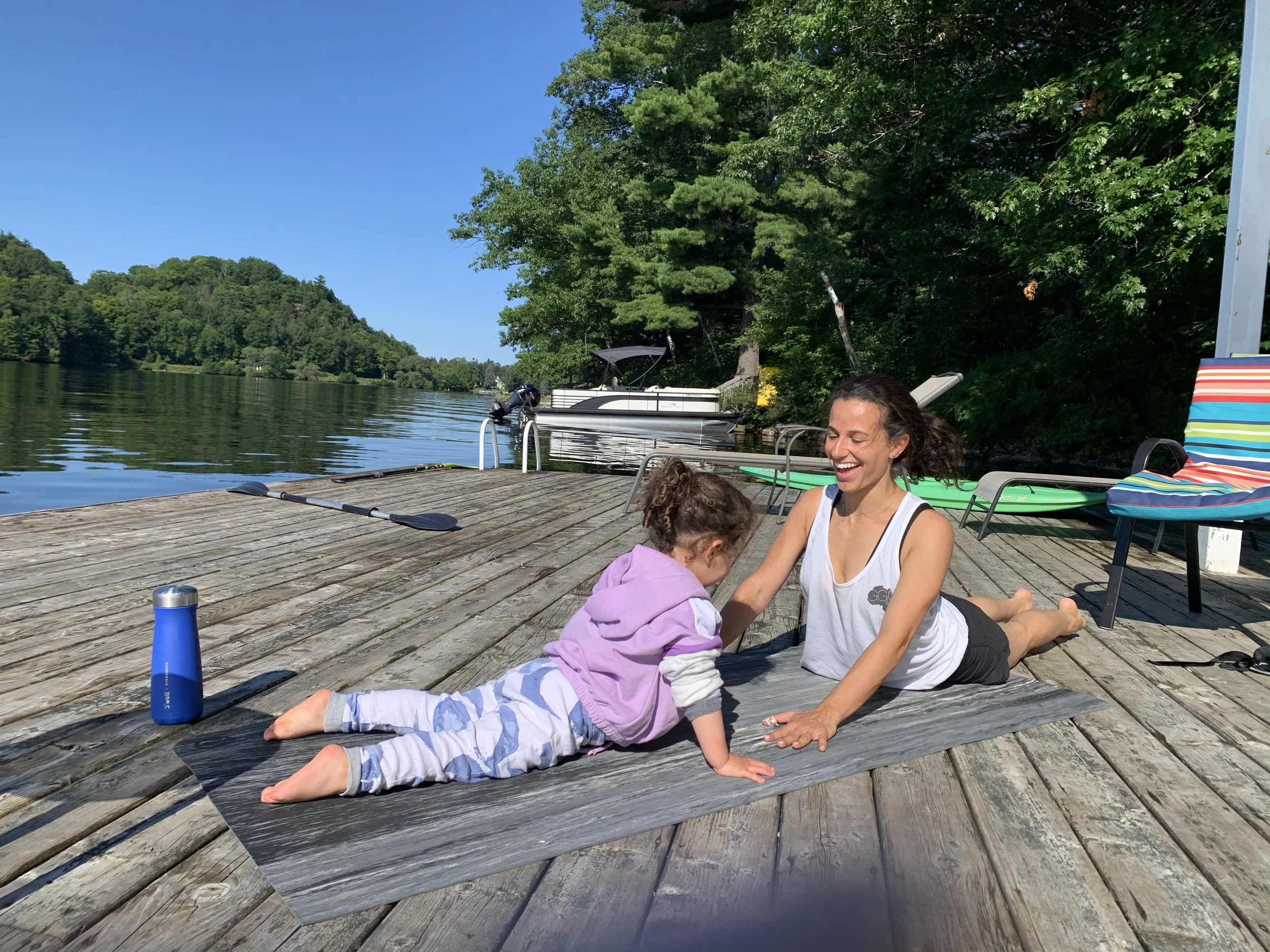
Cobra pose in nature
In the last several years, I have personally found a love for yoga. Yoga has helped me practice mindfulness through movement and it has given me a special space on the mat. Stepping on the mat has become a meaningful and safe space for me to decompress and separate myself from work. Based on personal experiences and evidence-based knowledge, I’ve learnt that everyone can benefit from yoga practice. Since entering the OT program and learning about the importance of movement and mindfulness, teaching yoga to others has become a strong interest of mine.
As we prepared for the campers to arrive at Larchwood Nature OT camp, we were fortunate to receive training in Kids Yoga for All Abilities, led by a teacher from Appleseed Yoga. Evidence suggests that yoga for children have both physical and mental benefits.
Physically: yoga can help improve balance, strength, endurance, aerobic capacity.
Mentally: yoga has the ability to improve focus, memory, self-esteem, academic performance, class behaviour and reduction of anxiety and stress. The interesting part of kids yoga is that it meets the child where they are at and trusts the child to take the lead.

Example of a Yoga card used at camp!
At Larchwood Nature OT camp, yoga is incorporated into our daily activities and provides numerous benefits. Our yoga sessions focus on 4 main components: Connection, poses, fun and games and relaxation. Over the last three weeks, we’ve seen the impact of yoga on the kiddos abilities to focus, practice mindfulness, work on creativity, gross motor movement and emotional regulation. We incorporate yoga in many fun and meaningful ways to engage our campers. Activities include: yoga dance freeze, yoga stories, yoga movement books and yoga go fish! We saw first hand the benefits of yoga for the kiddos- providing them a space to release their tension, let out their energy, practice their breathing, improve their strength and balance while playing with their friends! Movement breaks help the kiddos focus and regulate for activities afterwards. Including this in our day helped the children engage meaningfully and practice mindful movement. These mental and physical skills are transferable to school, home and overall health and wellbeing.
Learning to incorporate yoga into our daily lives has the ability to bring these skills into other activities and situations beyond our mats. I hope to continue to incorporate yoga into my practice and teach components of yoga to people of all abilities.
Combining my Passions!
Hello! My name is Jenn and I’m a second year Occupational Therapy student at the University of Toronto, completing my final fieldwork placement at Larchwood Nature OT camp. When it was time to rank our preferences for our final OT placement, Larchwood Nature OT camp was my top choice. Reading the placement description, I was highly intrigued and knew it would be a perfect fit. I am grateful for being granted this placement! Larchwood nature OT combines my lifelong passions; working with children, being in nature, mindfulness and inclusion. This camp provides the opportunity for all children to feel included in a camp setting, to create meaningful relationships, work on fine, gross motor and social skills, emotional regulation and sensory challenges. The kids participate in therapeutic nature based activities including yoga, arts and crafts, water play and emotional regulation.
So why did I select this placement!? I’d like to share a bit about myself!
I grew up and lived in the city, but have always loved and found peace in nature. My “happy place” is in the lake or by a waterfall!
Since the age of 8, overnight summer camp up north by the lake was my home away from home. I attended camp for 13 summers, as both a camper and staff eventually working as a waterski instructor. The camp I attended had a unit for children with disabilities which allowed me to create bonds and relationship with kids of all abilities from a young age. I learnt the ability of nature and the camp setting to bring kids together to foster inclusion and understanding of diversity.
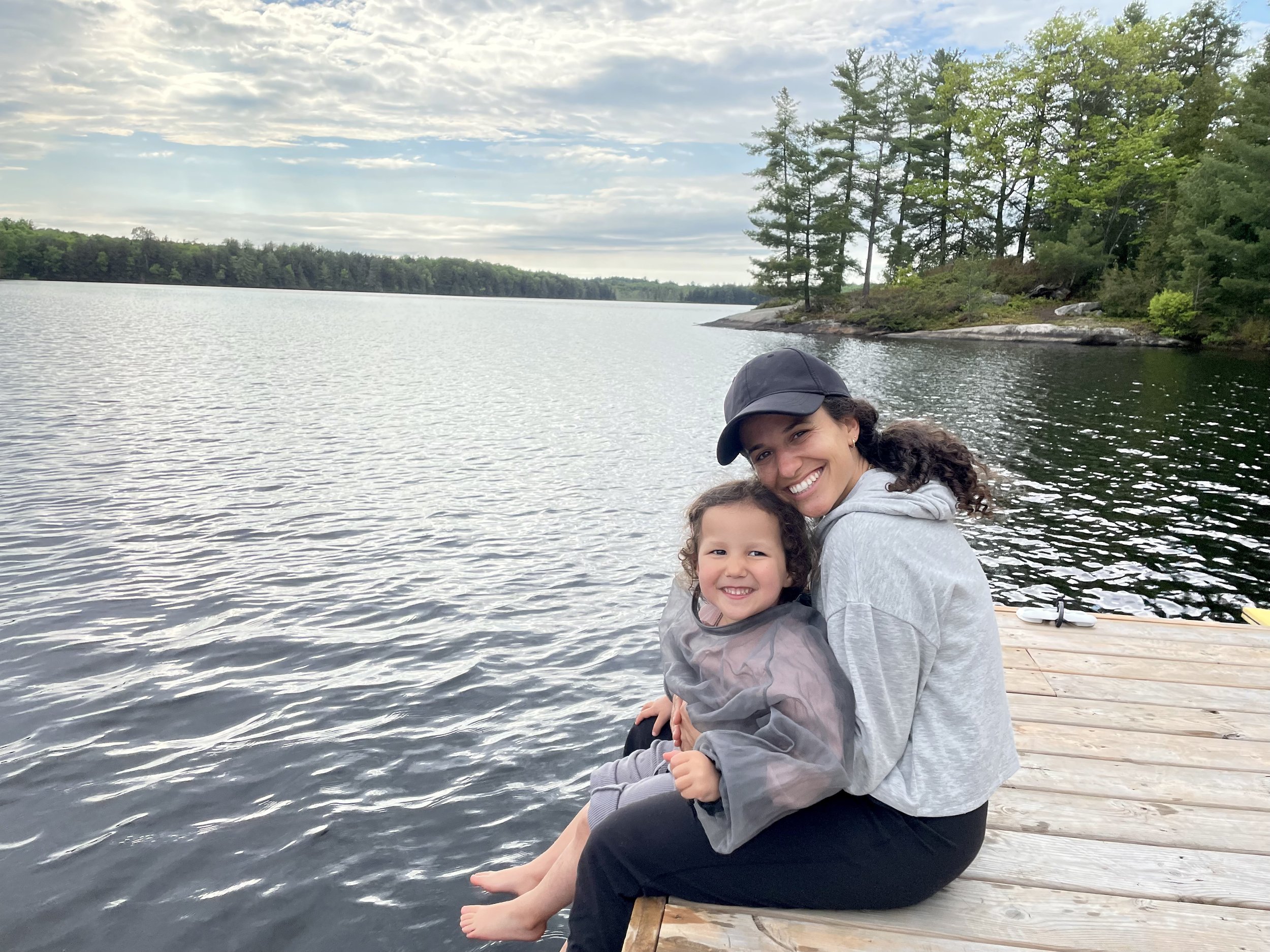
I also have a passion for children. Growing up as the youngest in my family, I am fortunate to have lots of younger nieces, nephews and cousins. Watching them grow up and supporting their development has been a true highlight in my life. These aspects combined with my knowledge of OT at UofT so far, allowed me to feel like a great match for the Larchwood Farm OT camp! I am so excited to continue to learn about the benefits of nature in OT practice and how to best support all kiddos throughout my work here at the Larchwood Nature OT camp!
From West to East!
Hello everyone! My name is Amy (she/her). I am a second year occupational therapy student from University of Toronto. As this is my last fieldwork placement before I graduate I really wanted to end with an exciting placement. So I came here to Larchwood!

Exploring Banff national park
Learning about all the different places therapy can take place has been so exciting, so far we have done therapy in a barn, in a field, on a walk through the forest, beside a pond, and while visiting all sorts of farm animals! All these unique environments offer experiences, stimulus, and challenges that are unique to the outdoors. Teaching about the senses by picking flowers and herbs to smell, or learning about self regulation strategies to handle frustration when the minnows are hard to catch are two examples of nature based occupational therapy occurring out at the farm.
I’ve always wanted to work with children and youth. I learned a lot of my skills about play and building therapeutic relationships during my undergraduate degree in Child and Youth Care at Vancouver Island University. It was there that I first learned about the therapeutic applications of nature when I took a wilderness therapy course that included an 11 day canoe trip in the backcountry.
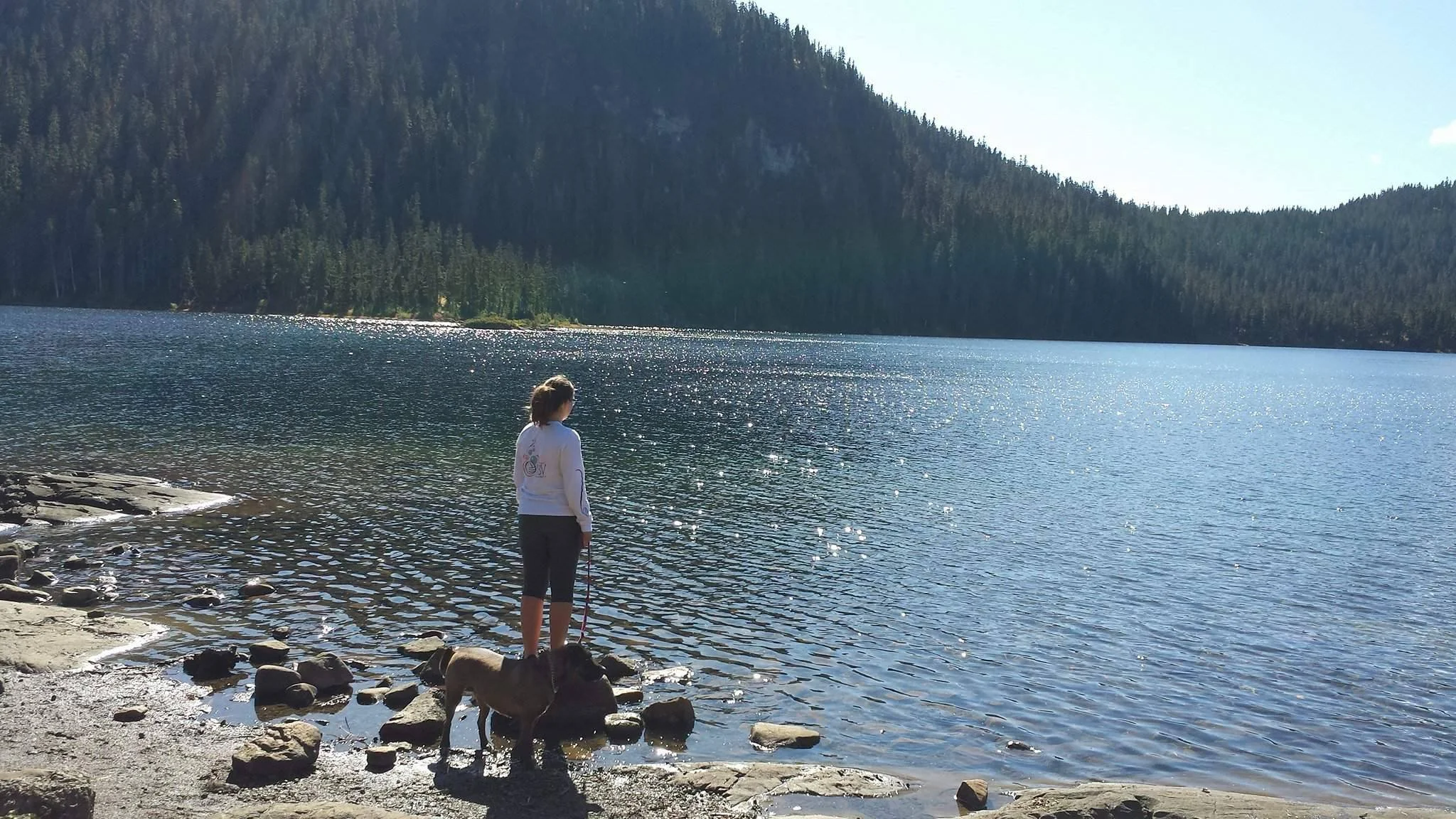
Me and my dog Milly at lake Helen Mackenzie on Mount Washington
Growing up on Vancouver Island meant I was always surrounded by nature. My family loves going on hikes, having campfires, going to the waterfall park nearby our family home, camping, and kayaking. My partner and I love going on road trips around the Island and exploring all the different trails and beaches. I’ve enjoyed checking out some of the waterfalls and beaches that the Durham region has to offer during this placement with my fellow OT students here on placement. I am looking forward to all the exploring and experiences this placement has to offer over the rest of the summer!

The Zones of Regulation®
Zones of Regulation®
At Larchwood Farm Nature Camp we practice the Zones of Regulation® with our campers to help them develop an awareness of feelings, their levels of energy/alertness, and tools/strategies for emotional regulation and prosocial skills. The zones offer an easy way to talk and think about feelings and categorize them into four color-coded zones. On the first day of camp we explain what all the zones are, and then each day we play games which reinforce their usage. We encourage our parents to learn the Zones of Regulation® curriculum in order to continue its usage at home.
What are the Zones?
Blue Zone: This zone represents feelings that are low alertness such as bored, sad, tired or sick.
Green Zone: This zone represents feelings that are an ideal level of alertness such as calm, focused, happy, okay. This is the level where kids are ready to learn. This is the level where emotional regulation strategies should be taught.
Yellow Zone: This zone represents feelings with a heightening level of alertness such as frustrated, anxious, fearful, stressed, silly or excited. This is the level where emotional regulation strategies should be introduced to prevent escalation into the red zone.
Red Zone: This zone represents feelings with an extremely heightened level of alertness such as rage, explosive behavior, terror, panic, or elation. At this level there is a loss of control and it is very difficult to introduce emotional regulation strategies.
It is important not to teach the premise that one zone is better than the others. For example, we don’t want to teach that the red zone is bad because we don’t want the child to feel shame or embarrassment if they enter red as it is often out of their control.
How to Utilise the Zones of Regulation® at Home
An example of how to reinforce these zones at home would be to ask throughout a story which zone your child thinks the characters in the story are in; depending on the zone you can ask them what strategies they think the character could use, or point out what strategies the character uses.
Model the zones yourself: for example, if you are feeling frustrated in front of your child you can say “I feel frustrated and I’m in the yellow zone so I’m going to take three deep breaths.”
Print out a Zones of Regulation chart to put on your fridge and place magnets for each member of the family on the zone that best represents your feelings that day to create a sort of check in system.
For more information on the Zones of Regulation® please consult the official Zones of Regulation® website: https://zonesofregulation.com/index.html


My new camp experience!
My name is Ekam, I am a first-year occupational therapy student from the University of Western Ontario. I am so excited for this amazing experience for my Level 2 placement with 3 other fellow OT students here at Larchwood Farm with Alanna!
Today I had my first day of camp and it was an amazing first day! I helped lead some cooperative games and I look forward to leading other activities such as the nature walk and yoga mindfulness sessions. Nature-based occupational therapy services are so important and I want to gain some more knowledge to take into my future practice. I am so excited for my new camp experience!
I grew up in the GTA and lived in a city my whole life but there has always been a big part of me that has been extremely connected to the outdoors. As a kid I always used to love playing outdoors with other kids who lived on my street and it was always a challenge for my mom to bring me and my brother inside when it got dark. We used to play soccer, hockey, hop scotch and imaginary play when we were outside. When I got older, I love being outside whether it is for going on a hike, painting, reading a book or simply just eating my meals outdoors and I feel the most peace when I am outdoors. When I saw the placement opportunity for Larchwood Nature OT camps, I felt that it was an amazing fit for me. I have been working as a camp leader since I was 16, it was my first job in high school and I loved it so much I went back every summer for 6 years! Combining my love for the outdoors and summer camps, I am so excited for the adventure that this placement will bring me. As I read through the blogs by the previous OT students, I am learning so much more about the benefits nature provides for children and I cannot wait to explore further how occupational therapy can be a part of this as well!

A Perfect Place for my Love of Children and Nature
Hello parents! My name is Lia and I’m a first year occupational therapy student at Western University completing my fieldwork placement with Larchwood Nature OT. For the next two months I will be on my clinical fieldwork placement at the summer camp program helping children engage in therapeutic nature based activities including yoga, water play, mindfulness, and hiking. Through these activities I will help them work on motor, cognitive, social emotional and sensory occupational challenges. I am also interested in creating resources for parents & caregivers to utilise the strategies from camp at home.
I have personally experienced the therapeutic effects of nature from a young age and I have a passion for working with children which is why I was drawn to this opportunity. I grew up in a very small town in Connecticut with a forested area. My sister and I would spend hours exploring our backyard for bugs, frogs and plants; climb trees, roll in the grass, run in the rain, and spend all the time we could in the sun. Last year I deeply reconnected with nature in Hawaii where I spent all my days outdoors for two months swimming, hiking, surfing, snorkeling, and playing beach volleyball. While I love the urban aspects of a city I am always drawn to the outdoors.
My passion for children started from a young age. My brother is 9 years younger than me so I always felt very nurturing and protective of him. I fostered this love of kids by spending summers working as a nanny, since the age of 16. I love creating games tailored to kid’s passions and interests along with crafts, storytelling and reading. My favorite part of camp so far was leading a mindfulness yoga session by acting out the well known story "Where the Wild Things Are", through yoga poses and active movement.


Occupational Therapy & Concussion Management

Following a concussion, an individual may be referred to or seek help from multiple health professionals– one of which is an occupational therapist. But what is occupational therapy and how can it help with concussion management?
Occupational therapy is a regulated and licensed health profession which aims to enable participation and engagement in everyday meaningful activities. Within occupational therapy, “occupation” is loosely divided into self-care, productivity, and leisure. Occupational therapists collaborate with their clients in looking at the strengths and limitations in each of these occupational realms in order to find ways to help their clients do what they want to do, need to do, or are expected to do in their daily lives. Occupational therapists provide a unique viewpoint of assessment, treatment, and recovery as they work in a broad scope of practice areas and can understand rehabilitation holistically and functionally.
Here are 5 ways that occupational therapists can help with concussion management:

1. Education. There is SO much information out there regarding concussion care and recovery, and this can be overwhelming for patients. Occupational therapists can help an individual understand their concussion symptoms and how such symptoms may impact their daily life, as well as providing education regarding what treatment options are suitable and available for an individual’s unique context.
2. Re-engaging in meaningful activities. It is natural for concussion patients to feel disoriented from their daily routine as they learn to manage their post-concussive symptoms. Occupational therapists can work with clients and their families to determine what occupations are meaningful to the individual and identify ways that the individual can re-engage in these activities through a functional cognitive screening, appropriate education, strategies, and support.
3. Cognitive, visual, or vestibular rehabilitation. Occupational therapists are well equipped to provide cognitive assessment and consequent rehabilitation training in the form of education, cognitive skills training activities, and other functional activities to improve cognitive endurance and tolerance to overstimulating environments. Such cognitive skills training includes functional activities aimed at strengthening executive function and utilizing a strengths-based approach in improving function whenever possible. Depending on an individual’s given impairments following concussion, an occupational therapist can also refer a client to other treatment providers who can further assist with recovery.
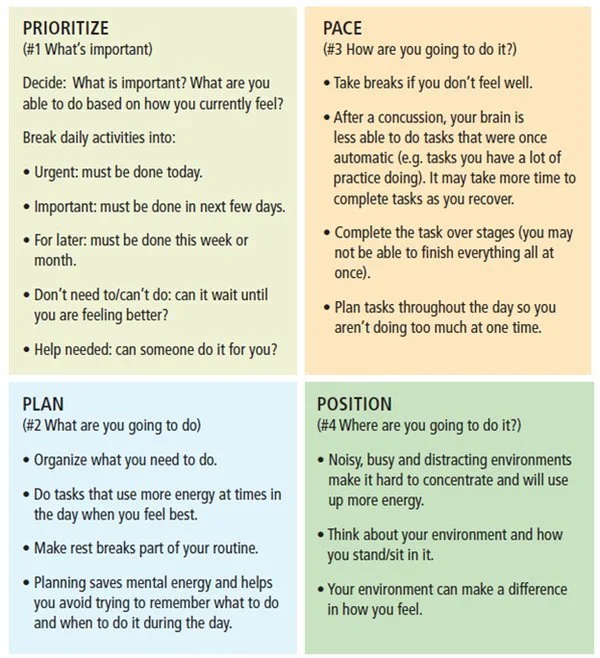
The “Four P’s” of energy conservation. Source
4. Energy conservation and relaxation strategies. Over the past several years, concussion care has evolved to no longer prioritize prolonged rest following concussion but rather encourage a gradual return to daily activities. Occupational therapists can provide energy conservation strategies, such as the “Four P’s” principle (Prioritize, Plan, Pace, Position), to promote a gradual return to meaningful activities following concussion. Part of energy conservation is also learning how to incorporate adequate self-care and compassion, and understanding your own limits. Occupational therapists can also work with clients on incorporating mindfulness strategies, coping plans, and other relaxation techniques to manage stress and anxiety related to an individual’s concussion.

5. Return to Work (RTW) Assessments and Planning. We know how challenging RTW can be following a concussion as an individual navigates symptom management in new environments. An occupational therapist can assess readiness to RTW, conduct on-site job demands analyses, conduct ergonomic assessments, and collaborate with your employer on gradual return-to-work (GRTW) planning and monitoring. An occupational therapist can also advocate for any accommodations an individual might require for their job following concussion, including both physical accommodations (e.g., prescribing and recommending assistive technology as needed, modified tasks, etc.) and/or cognitive accommodations (e.g., reduced work hours, increased breaks, coping strategies, etc.). If an individual cannot return to their previous job for whatever reason following a concussion, an occupational therapist can also conduct a vocational assessment to help seek new or alternative opportunities that meet their functional abilities.
These are just 5 of the many ways that occupational therapists can help you with managing your concussion. At Davis Occupational Therapy, we offer private and group occupational therapy services to help you with the above aspects of concussion management and so much more. Contact us today for more information!
Click the button below to see our Concussion and Mild Traumatic Brain (mTBI) Injury Resource list for access to more evidence-based handbooks, webinars, podcasts, and apps for concussion management.

Travelling and Mindful Self-Discovery
Hello there, Davis OT! My name is Leila and I am a second year Occupational Therapy student from Western University completing my final placement in Adult OT Services here at Davis Occupational Therapy. For the next two months, I will be working to continue the development of the Nature-Based Mindfulness Program for adults with ADHD, as well as developing some new concussion management resources and programs for Davis OT (Stay tuned for this in the near future!).
I wanted to take this blog post to introduce myself and explain a little bit more about my relationship to nature and mindfulness. My relationship to mindfulness began in my undergraduate days at the University of Toronto, where I completed a minor degree in Buddhism, Psychology, and Mental Health. As part of my degree requirements, I completed several courses discussing the increased use and implementation of Eastern medicine into the West—mindfulness being the most common transferable intervention. I found it enlightening to learn about how consistent mindfulness practice leading to increased self-awareness and a focus on the present moment can provide similar benefits to managing physical and psychological issues commonly treated with medication. Since my undergraduate days, I have regularly practiced mindfulness myself through meditation and reflective journaling, and have experienced the benefits from it first-hand in managing stress and anxiety as a student. I have also had the opportunity to facilitate mindfulness groups and one-on-one sessions within my other clinical placements, and have come to understand mindfulness as a viable and effective treatment modality for most physical and psychological impairments, illnesses, or disorders.
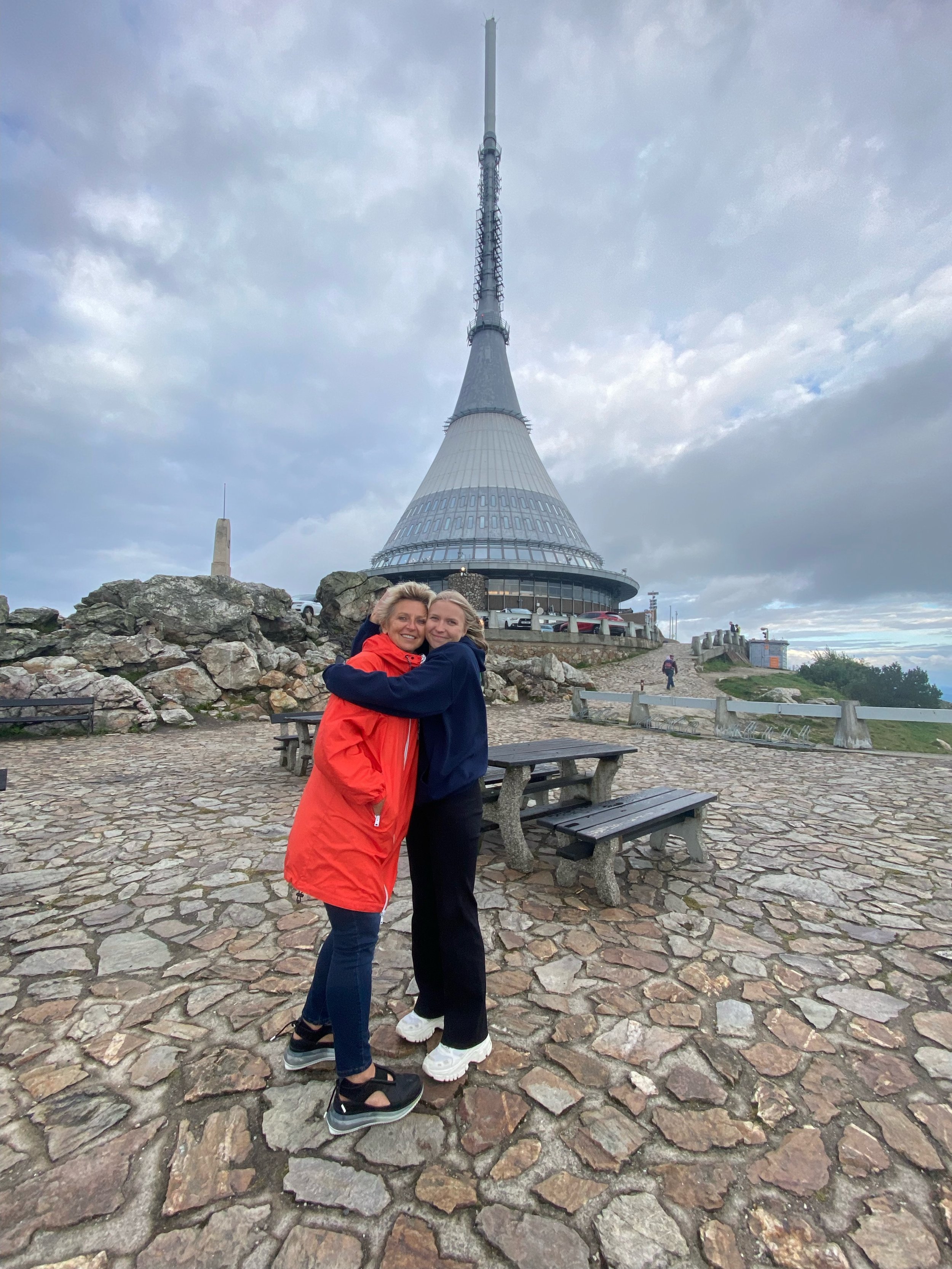
A picture of my Mom and I in front of Ješted, the highest mountain peak in our hometown Liberec, Czechia.
I was born and raised in Toronto, although my entire family was born and lives in Czechia, a small country in Central Europe. Throughout my life, I’ve spent a lot of time travelling back and forth from Czechia to Canada to visit my family and I have been lucky enough to learn and appreciate the differing cultures to a great extent. From a very young age, my Mom instilled in me a defined curiosity in discovering diverse ways of knowing and being through travel. I have since had the privilege to visit over 40 countries around the world, all of which have shaped how I perceive my day-to-day experiences. It is through travelling that I have been able to not only learn about other cultures beyond my own, but also learn more about myself.
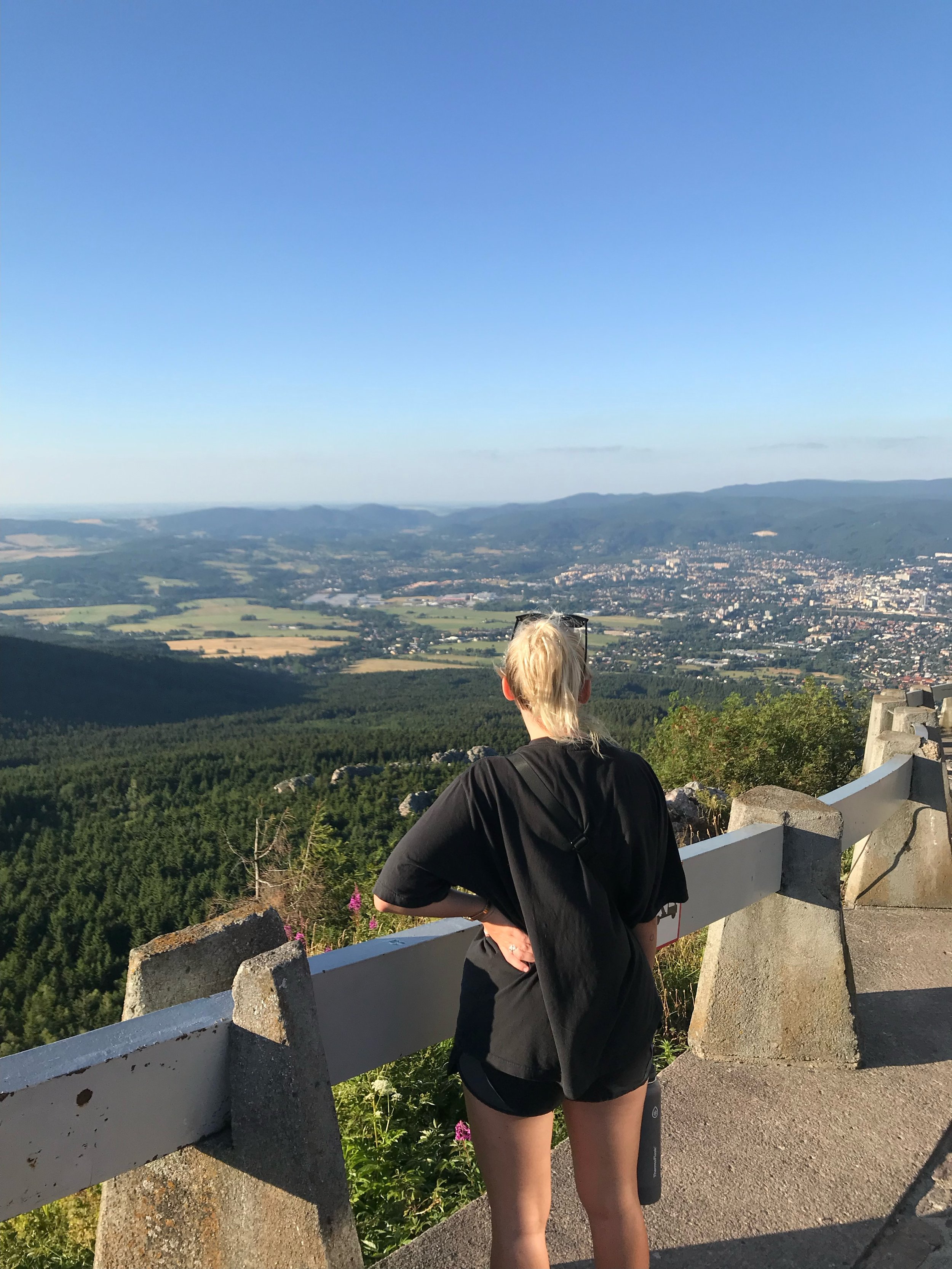
Overlooking the landscape of my hometown in Liberec, Czechia.
One of my favourite things about travelling is experiencing the wonderfully diverse landscapes across the world. Urban landscapes are fascinating, but having been born and raised in a city, I have developed a deep appreciation for the relational aspect of nature. I love how the grounding aspect of nature exists no matter where you are in the world, even though our visual perception of it can take different shapes and forms depending on the geographical area you happen to be in.
Most recently in April 2022, I had the chance to explore Jordan: a country in the Middle East with beautiful landscapes, delicious food, and incredibly kind people.

Me in front of the iconic Treasury in Petra, Jordan.
My favourite part of the trip included exploring Petra, a famous archaeological site in Jordan’s southwestern desert dating back to around 300 B.C.. Petra is rightfully considered one of the New 7 Wonders of the World, with beautiful hiking trails leading to tombs and temples carved into pink sandstone cliffs. We spent our time there hiking long trails under the blaring sun heat whilst being rewarded with gorgeous views and occasional cool shade from the insides of tomb sites. I find hiking in such landscapes meditative in itself, and have come to appreciate how mindfulness can organically manifest within nature.

Sand-boarding in the Wadi Rum Desert.
Another part of the trip I adored was roaming through the Wadi Rum desert, which is a valley cut into sandstone and granite rock located within Southern Jordan. This desert has been used as a film site for famous futuristic films, as the landscape looks much like what we would imagine Mars to look like. I had the opportunity to try “sand-boarding”, which was not as easy as I anticipated! Hiking through the desert in the dry heat as my feet sunk into the bright orange sand, I had never felt so happy to feel so exhausted. I love making the effort to be one with nature—feeling the fresh air on my skin, hearing the chirping of the birds and rustling of the wild insects and animals, and simply being present and amazed of the vast natural beauty in this world of ours.

The vast and beautiful Wadi Rum Desert in Jordan!
Well, that’s all from me for now! Thank you for reading what seems to be a snippet of my life story and for learning more about me. I am so excited to use the next two months of placement to work towards instilling my passions for nature and mindfulness in others using the continued development of the nature-based mindfulness programs for adults at Davis OT. Stay tuned for more to come!
Endings and New Beginnings
As my placement with Davis Occupational Therapy comes to an end, I would like to share more about my experience with this incredible company.
I was drawn to this placement, as it described an opportunity to develop a nature-based mindfulness program for adults with ADHD and the opportunity to explore nature locations within Toronto. After almost two years of my predominately virtual graduate studies, I was excited to take part in a placement that would allow me to spend time outdoors. I was also greatly intrigued by the concept of incorporating nature into occupational therapy. Nature has been so restorative in my own life and this placement has given me the opportunity to explore the literature that supports the therapeutic potential of nature-based therapy, something I have always believed in. Furthermore, this placement provided me with the opportunity to develop a program to share nature and mindfulness with adults experiencing ADHD symptoms, a population particularly impacted by the pandemic and the recent shift to a majorly virtual world.

Riverdale Park in Toronto is where we have been running the in-person version of the Nature-Based Mindfulness program. This large outdoor space has allowed for walks to be incorporated into our group discussions, as well as for mindfulness practices surrounded by greenery.
Program development has taught me about the importance of tailoring content and program structure to the target population. In particular I learned the value of seeking feedback during the process of program development from the target population. For instance, connecting with adults with ADHD in Toronto and gathering information on their needs, has led to the development of a virtual program in addition to the in-person program being offered. Connecting with these individuals revealed the many reasons why virtual and hybrid programs were preferred by many, such as maintaining safety during the current wave of the COVID-19 pandemic and allowing participants outside of the Greater Toronto Area to attend. I am very excited to now be running the nature-based mindfulness pilot program both virtually and in-person, enabling greater accessibility for our clients to join on this journey. The pilot is currently full, however, more sessions and the 8 week program will be offered in the near future.
In the final days of my placement I will be running the nature-based mindfulness program with my fieldwork partner and collecting feedback from our participants to inform future versions of the program, to make it the best it can be. To have developed the program and now be running it within the eight weeks of this placement is a feat that could only be accomplished with the support and guidance of Alanna and her amazing OT team member Paula, as well as my fieldwork partner Heather. Together they have made this experience so positive and have expanded my understanding of occupational therapy practice and harnessing the power of nature in enabling health and wellbeing.
Diving Into Mindfulness
Throughout my fieldwork placement at Davis Occupational Therapy, I have been working alongside another student OT, Emily, to create a nature based mindfulness group program for adults with ADHD. Beginning this program, I had dabbled a bit with mindfulness exercises, mostly only completing them during OT classes where we learned about mindfulness and the benefits. I had yet to try mindfulness exercises in my own daily life and/or as a student OT.

This placement has encouraged me to jump right into mindfulness exercises and explore the variety of different settings to practice mindfulness exercises and get first hand experience of the benefits.
Creating this program has given me a wealth of knowledge on mindfulness exercises for attention and executive functions that I will summarize below.
1. Whenever, wherever! A huge advantage to doing mindfulness activities is you can complete them whenever and wherever you need and/or want to! Many activities are short and require only your breath and body (which you always have with you). They can be completed at work, waiting in lines, in your home, even briefly while stopped at a red light. A brief exercise that I have incorporated into my day is called “Phone Breath”. In this exercise, whenever I receive a text this is a reminder for me to take a mindfulness breath and bring my awareness to the present. This can also be done whenever you receive an email, or while stopped at a red light while driving. I find this exercise to be helpful to provide me with short reminders throughout the day to bring may awareness to the present and keep me on task. Tell us in the comments below where you complete mindfulness exercises!

2. Benefits, benefits, benefits! Mindfulness exercises have so many benefits. Exercises can be tailored to provide you with the benefits you are seeking. Different exercises can help with racing thoughts, drifting attention, pain and restlessness, managing emotions and being in the present. This makes mindfulness practice adjustable to what symptom or experience you are having in that moment. Our new mindfulness in nature group program provides participants with a variety of different mindfulness exercises and a toolkit with all of the exercises plus more to have with them outside the program.
3. Mindfulness is like a muscle! Like many activities, with practice, mindfulness exercises become easier to complete, more automatic and more easily incorporated into your daily life. We like to say that mindfulness is like a muscle, the more it is worked the stronger it gets. Thus, in order for me to feel comfortable and build my mindfulness muscle, I practiced different mindfulness exercises throughout my placement. This practice has prepared me for completing mindfulness exercises with clients and answering questions about mindfulness exercises in practice.
We are currently recruiting participants for both in person and virtual pilot sessions for our Mindfulness in Nature Group Program. Click the button below to explore pilot session options and sign up! Pilot sessions are donation based. All donations will go towards funding to send a child to camp at the Larchwood Farm Nature OT Summer Camp!
New Developments at Larchwood!
Hi everyone! We wanted to update you on some of the work we are doing at Larchwood this Spring! As we know, exposure to nature can help:
· decrease stress
· improve emotional wellbeing
· build resilience
· develop social skills
· support cognitive functioning and more!
Although we know these benefits exist, we are still looking for ways to measure these changes in our nature-based OT interventions at Larchwood. Over the past couple of weeks, I have been working on finding an evaluation tool that will help us measure change in the weekend nature OT groups at Todmorden Mills.
Why are we looking at evaluation outcome tools here at Larchwood?
Evaluation is an important part of occupational therapy because it helps us understand how useful and effective the interventions we provide are. We can use this information to make changes and improve future nature-based OT sessions for your kids. Since Nature OT is a newer area of practice, we need to research and try different tools to find the right one for our groups!
Inclusion of Nature in Self Scale
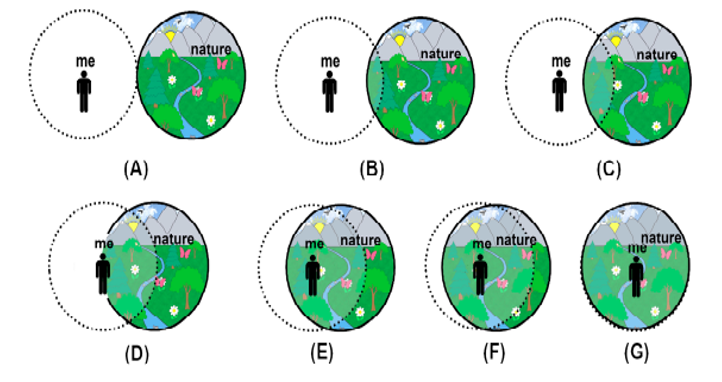
Inclusion of Nature in Self Scale we are using in our sessions this spring!
The first evaluation tool that I found is called the Inclusion of Nature in Self Scale. This scale uses two circles to help understand how a person sees their relationship with nature. So far, we have been trying to use this measure with the Spring groups at Todmorden Mills. We are hoping that this scale will help us understand how each kiddo in our program sees their relationship with nature before the program and if there are any changes in this relationship after the 8-weeks of the program!
Social Skills Improvement Scale Rating System
We are also looking at another measure called the social skills improvement system. This evaluation tool will help us measure and monitor whether there are changes in your children’s social skills after the program. Alanna and I are currently working on a research grant application to apply for funding so that we can buy this evaluation measure. We are hoping to try it out in the Fall and Winter groups!

Nature and Connection to the Present Moment
My name is Emily and I am in my final year of Occupational Therapy at The University of Toronto.

Me at my aunt and uncle’s farm. This was my favourite place to be as a child, surrounded by nature and so many different farm animals.
I am currently completing a placement with Davis Occupational Therapy and could not be more excited to have been matched with this community of nature OT’s. Throughout this placement I will be developing a nature-based mindfulness program for adults with ADHD, an opportunity that is close to my heart. I personally have experienced the restorative and holistic health promoting effects of nature and mindfulness, nature from a young age and mindfulness throughout my post-secondary education.
As a child, I loved the outdoors and always felt a special connection to animals. Growing up in North York I frequently visited the ravines and trails where I quickly developed a fascination with plant species and small critters. Although I did not know it at the time, these experiences in nature as a child were building the foundation of a mindfulness practice that I would draw on later in life.
Me enjoying a walk in Toronto and taking a moment to be mindful.
As a student, particularly as a student during the COVID-19 pandemic, it is easy to become disconnected from nature, as well as from the present moment. In this time, I have gone back to my roots and rediscovered my love for nature. Nature has become an essential part of my busy schedule taking the form of tiny everyday moments walking outside on my lunch break, stopping to feel the bark on a tree, or watching the birds from my window. I feel so fortunate that on my longer breaks I have been able to explore the backcountry of Algonquin park where my ability to connect with nature and the current moment have brought peace to my mind and body. These small and large experiences ground me and I am intensely aware of how they generalize to my everyday life, helping me stay mindful and present throughout my studies. In developing the nature-based mindfulness program I am excited to be able to explore the substantial research on these topics and develop an evidence based program for Davis Occupational Therapy, which I hope will touch the lives of adults with ADHD so that they may thrive.
Find your love of the outdoors!
Hi everyone! My name is Heather, I am an OT student from the University of Toronto working with Alanna on the adult side of Davis Occupational Therapy. This will be my third placement, I am very excited to support the team in developing a program to support adults in the Toronto Area.

Growing up I spent all of my time outdoors. I loved to run through forest trails, explore new areas, swim at the beach, climb trees, build snow forts, and play at playgrounds. When I think back to childhood memories of being outdoors, I feel the warm sunshine on my face and can visualize my child self smiling. Being outside is the perfect environment to foster independence, curiosity, and a love of nature from a young age.
As I became an adolescent, I found myself spending more and more time indoors whether that was with friends, extracurricular activities, or school work. I remember losing some of my love for nature, fresh air and the warm sunshine on my face. But then, I began working at a summer camp where I spend all hours of the day outdoors for the next 6 summers. This job pushed me to start exploring the outdoors again, find new ways to enjoy time spent outside and how to share nature and sunshine with others. I regained my love for the outdoors, which has only continued to build.
With this new appreciation for the outdoors, I have learned to recognize the vast variety of activities that can be explored in nature. One of the most unique aspects of nature is the ability to use and appreciate nature in all points of your life.

Whether that be as an infant exploring sand for the first time, finally climbing to the top of a tree as a child, sharing forest trails with campers as a young adult, exploring mountains with your mom, as my mom exploring mountains with her daughter and now learning the benefits of incorporating nature into therapeutic practice.
When given the opportunity to help create a program for adults using nature as a therapeutic vehicle I was thrilled. Not only will I have the opportunity to learn how to create an occupational therapy program, but I will be able to incorporate my love of nature into the process. A main goal of mine with this new program is that we will be able to use nature in not only a therapeutic sense but to also help others regain and/or grow their love of nature.
Adventure Awaits!
My name is Katie, and I am a second-year occupational therapy student at the University of Toronto. I am really excited to be working with Alanna and the rest of the team with the nature OT programs in the city for my third fieldwork placement!
Growing up in a small town, I was surrounded by tons of greenspace, farms, and animals. I spent my summers at my cottage in Quebec. We didn’t have any cell service or internet access at my cottage, so our days were spent outdoors swimming, boating, exploring trails, and fishing. My favourite trail took us to some waterfalls where I was able to explore and build my confidence in nature.
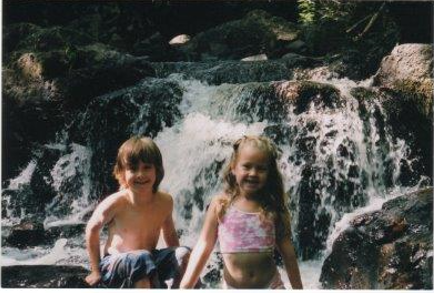
My brother and I exploring the waterfalls by my cottage.

One of my favourite hikes!
These early experiences inspired a love of the outdoors and a drive to find new adventures. This passion has led me to seize opportunities to explore new environments from an expedition in the Amazon rainforest to the hiking in the Rocky Mountains to chasing the Northern Lights in the Northwest Territories. All these experiences made me feel a sense of peace and connectedness to the environments around me.
Since the start of the pandemic, I felt like I had to put these adventures on hold. I moved from Banff to Toronto, and I felt like I had lost my all-access pass to nature. So, when I learned about this placement opportunity, I knew I had to jump at it as it combined my passion for occupational therapy with my passion for the outdoors. I am so excited to see where this new adventure leads, and I hope that I can inspire the children in this program to love the outdoors as much as I do!
Season's Greetings from Alanna
Hi everyone,
I haven’t written a blog post for quite some time! So what better time than in December, my favourite month! I’m a Sagittarius through to the bone - lover of winter, ultimate dreamer, traveler, loyal friend, creative and caring. I was born a week before Christas and have never wanted to change my birthday in any way!
What you may not know about me is that this Entrepreneur ride has been a steep learning curve. I love, love, love program development and tapping into my creativity. What I do not love is the finance side of things, so alas that is my knowledge gap and where I continue to push myself.
This company is growing and becoming more than what I ever dreamed. I have met such an incredible group of Nature OTs, all over the world, and continue to meet new, aspiring Nature OTs. It’s amazing how often I open my email to find a new message from someone that has found us and wants to know more - in fact may have their own dreams of becoming an OT Entrepreneur. I love to spend the time fostering these connections and supporting likeminded people!
So, I thank you - all of you! From my amazing team of Nature OTs, my keen volunteers, my awesome MScOT students, my nature-loving families who entrust us with their children to work on tough things like emotions and to my wonderful, supportive friends and family.
Happy Holidays to each and everyone of you. Here’s to 2022 and all that it has to offer. Many new things will be coming through Larchwood Nature OT and in fact we’re embarking on some fun programs to cap off 2021.
Keep joining us in this adventure - I promise, from the bottom of my Sagittarius heart, that it will continue to be progressive, creative, fun and wild just like me!
Larchwood Handwriting Camp Recap
We just wrapped up our mini Handwriting in Nature Group here at Larchwood, and it was an exciting, mutlisensory-filled experience for the kiddos! To recap, some goals of the camp were:

Review how to write letters correctly
Build confidence with letter formation
Build fine motor, gross motor and motor planning skills needed for handwriting
Many of the campers struggled with inconsistent spacing between letters, letter reversals, pressing down too hard, and difficulty making letters the right size. With this in mind, we planned various nature and multisensory activities to target these difficulties. While we only had a week, it was awesome to see improvements as we worked through these challenges together with the campers!
Some highlights from the week included:
Skywriting our names and birthday month
Telling a story with our yoga poses
Doing a letter scavenger hunt on our big hike
Writing in our journals to the daily prompts
Playing with clay and shaving cream to target those fine motor skills
Aside from these activities, we used the “Learning Without Tears (LWT)” handwriting curriculum, which takes on a multi-sensory and developmental approach to promote proper letter formation. According to the Handwriting Without Tears (2018) research review, they have a unique teaching order that starts with letters that have a vertical stroke. By grouping letters according to formation and complexity, a developmental approach is used, allowing children to learn in a scaffold sequence (LWT, 2018). Since easier letters are taught before letters with more complicated strokes, it provides an opportunity for students to build upon previous knowledge (LWT, 2018).
Now that handwriting camp at Larchwood is wrapped up, we will be sharing our resources and experiences with OTs running similar handwriting groups in the city. Stay tuned for more updates on the blog and Instagram!
Lifetime Learning
Our Larchwood Nature OT camp series has just been completed. With a weeklong administrative break in between this camp series and our Handwriting in Nature minicamp, I took some time to reflect on the past 3 weeks of camp. With this being Larchwood’s very first year running, I think it is especially important to check in with ourselves and our thoughts on how it all went and what we’ve all learned.
Looking back on the very first week I think we were all full of nervous anticipation on that Monday morning. “Would every child come?”, “How would it go?”, “Did we plan enough?”, “Are we (the students) ready?”, were all questions running through my head as we waited for cars to come up the driveway. Our lovely volunteer showed up first. Then the kids started rolling in.
That first week was a whirlwind of learning experiences for everyone, from truly administering our first assessments (which we had practiced but now had to do for real) to planning and implementing activities on the fly. And the learning just kept happening for the other weeks.
We learned to be adaptable in our activity schedule and to allow for the frequent thunderstorms with altered activities to keep the kids busy and still provide an enriching experience. We learned that storytime is always a big hit with kids, captivating them while simultaneously learning about recognition of emotions, self-regulation of emotion, or sparking discussions around topics such as self-esteem or bullying. We learned to be flexible around participation (it’s okay to not want to participate at times) and grade activities for each child. We also learned that one of the most beloved activities in our entire meticulously planned schedule was free play after snack or lunch. Simply letting the kids play and explore together in the yard was an opportunity they all embraced. This is only a fraction of the things we learned from the camp (I try my best to keep it short), but what about things we learned from the kids?

Nature painting quickly turning into finger painting
Well… We learned play skills from them (I can throw a boomerang now and it’ll come back!) and the kids learned play skills from us (Michelle gave T-ball lessons). The kids taught us to enjoy simple or not-so-perfect things like finding crayfish, messy painting, or minnow catching. We learned patience from them and that resilience or “try again” is a difficult and exhausting lesson to be learned. Through many of our discussions and talks with the kids we learned that taxes are perceived to be the biggest challenge to adults and that appreciating the small things in life, such as PortaPotties, never goes out of style.
Overall. these first weeks of camp were a great success, with lots of learning and lessons. However, I think one of the most important lessons to learn in this pediatrics placement was that we can’t be in “therapist” mode all the time. We can observe, think, and plan a ton, but it is important to sometimes let go and also just play, even as adults.
The Lessons Children Learn From Animals
Animal Day at FireFly Ridge
Goats Sunny and Stormy show the campers their teeter-totter!
Every Wednesday at Larchwood Farm Nature Camp, we pack up our things, put on our hiking shoes, and head out on a big hike to our neighbouring farm FireFly Ridge. Once there, we spend the day with the owners, Andrea and John, and their dozens of horses, donkeys, goats, pigs, and chickens. Campers have the chance to get up close with the animals, and it’s not uncommon to have a goat jump into your lap or have the horses eat treats right out of your hand. We harvest eggs from the chicken coup, John gives everyone a lesson on honey bees, and campers even get a chance to taste-test local honey.
Though the main goal of the day is to have fun, spending time with animals is inherently therapeutic and it’s been shown that children who spend time with animals show reduced symptoms of anxiety, increased immune function, decreased loneliness, and increased happiness. Additionally, children can learn valuable lessons from animals, including responsibility, personal space, patience, social skills, and compassion.
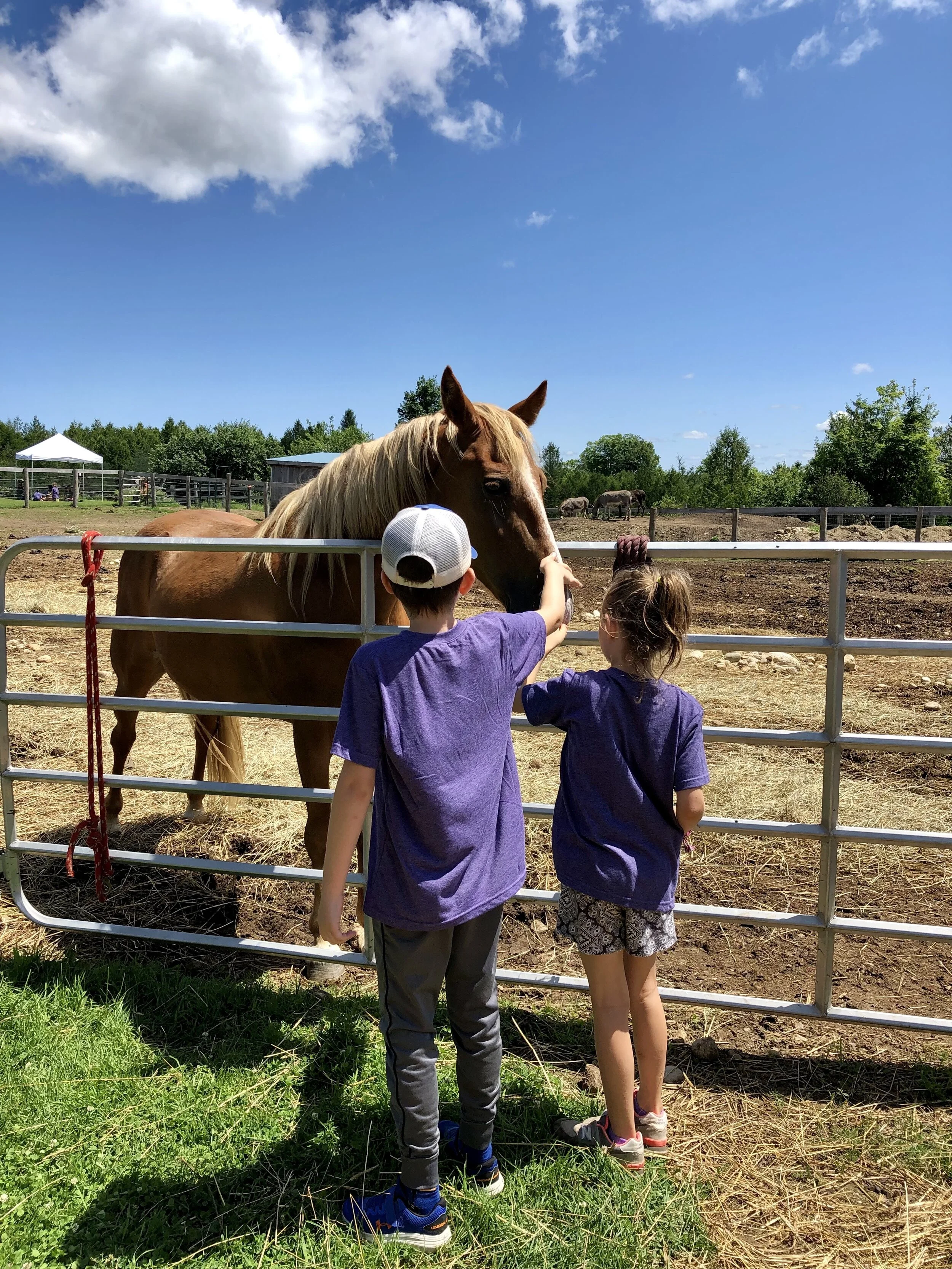
Campers take turns petting one of John and Andrea’s many friendly horses!
1. Responsibility. Many animals rely on humans for everything; food, water, shelter, and love. On our weekly trip to FireFly Ridge, children learn what the different animals eat and take turns feeding them. John and Andrea disclose the time and money it takes them to look after the animals, and demonstrate to the children what kind of equipment/environment each animal needs to thrive.
2. Personal SpaceMany animals require a lot of personal space and a gentle touch! At FireFly Ridge, our campers learn to approach animals slowly and to look for signs that the animals are uncomfortable, so that we can back away and give them space. Children too may feel uncomfortable being close with the animals, and will come to appreciate the fence or barricade between them.
3. Social Skills & Self-ConfidenceAnimals are a great non-judgemental audience for children to practice their social skills! An animal doesn’t care if you look different or sound different than other children. They want love just as much as we do, and are a great listening ear for children who are shy or need extra practice with social skills. In turn, practicing social skills in a low-pressure situation may boost children’s self-confidence.